


A few investment themes impacting the private markets that the Investment Strategy Team is watching closely for the year ahead, brought to you by the year 2026!
2
~2% is the long run average for direct lending default rates. Today, defaults are below that at ~1.5%. Loss rates are also below the long run average at less than 1%. Going forward, we believe the ability to manage losses will be a key driver of manager dispersion in private credit, particularly if credit environments become less benign.
Global private equity dry powder (buyout, growth and venture) stands at ~$2T, giving GPs ample buying power heading into the new year.
Private equity’s increasing access to professional sports has drawn significant investor interest—a trend we expect to continue into 2026. Yet we believe the opportunity extends far beyond leagues and teams: the broader sports, media and entertainment ecosystem represents an estimated $2T total addressable market. Read more
0
0 is the closest approximation of private real estate’s correlation to public equities. It’s correlation to public fixed income: negative. Given a persistent higher-than-average stock-bond correlation, we expect noncorrelation to be a key theme for portfolios in 2026. Read more
Since the turn of the 21st century, U.S. power demand growth has been relatively flat at a near-zero CAGR. But the confluence of an industrial/manufacturing resurgence and an AI/technology boom has flipped that trend. U.S. power demand is projected to grow 2-3% per year through 2040, with Europe not far behind at 2%. We believe energy and generation assets are poised for growth in the new year and beyond. Read more
2
2% is the Federal Reserve’s long-term inflation target. At a current 3% inflation level, the Fed’s monetary policy is challenged by the stance of fiscal policy. These opposing forces complicate the outlook for inflation settling into the 2% level. In this uncertainty, many investors are revisiting the importance of inflation-protected assets classes—and why asset classes with those characteristics have a place in long-term strategic asset allocation policies.
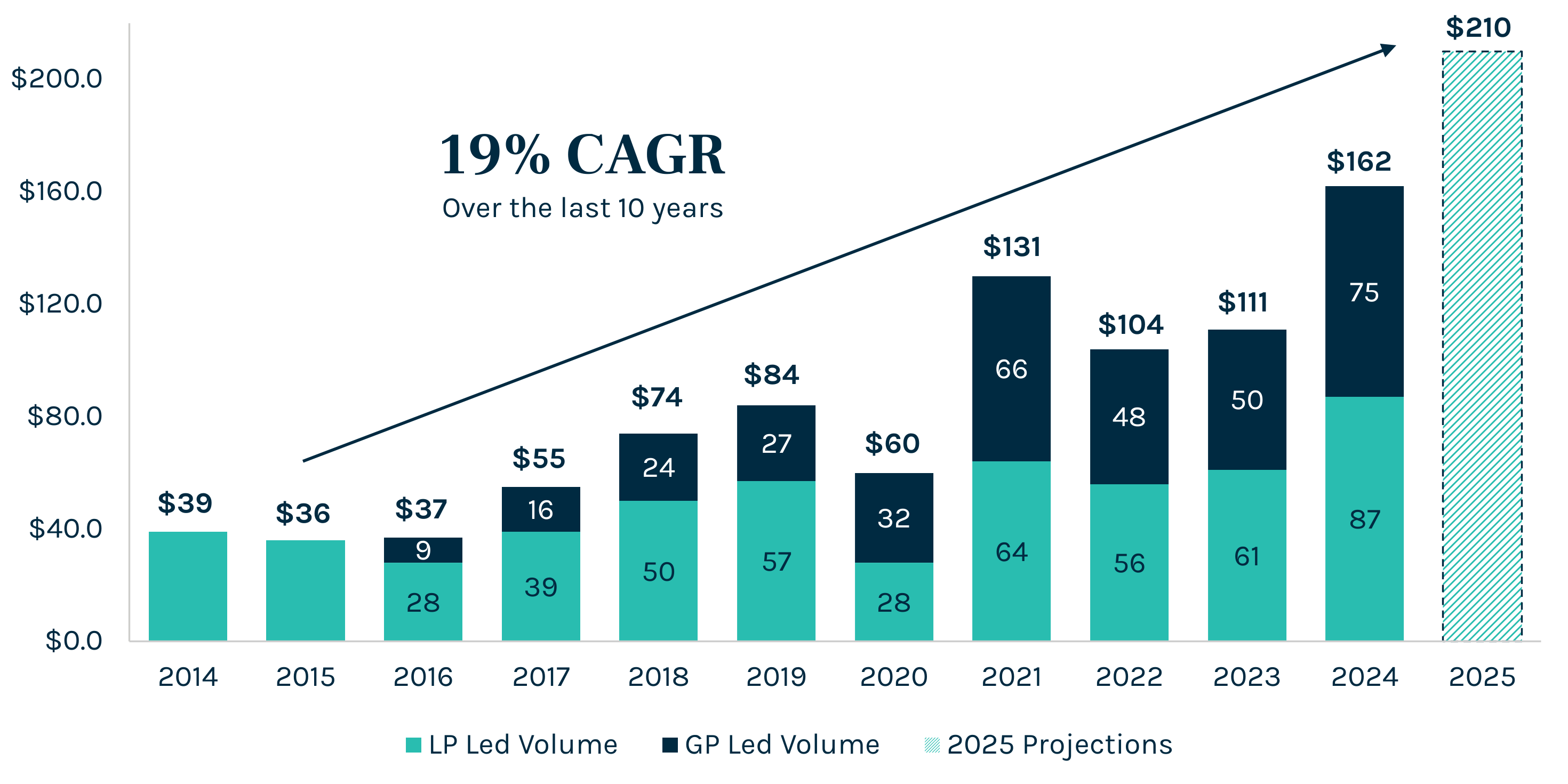
Secondaries transaction volume is set to pass $200B for the first time by the end of 2025. This large and growing segment is becoming an increasingly important part of the private markets ecosystem. Read more
Secondary Private Equity Transaction Volume ($ in bn)
6
~6% is the long-run average for PIK (“payment-in-kind”) as a percent of total income. Today, PIK sits just above that at 7.3%, but has not been aggressively bumping up in recent years (7.3% is also the three-year average). What we think will be more important to monitor is the type of PIK being employed. Read more
6% is still the going rate for mortgages in the U.S., further driving renter demand and the opposite for homebuyers.
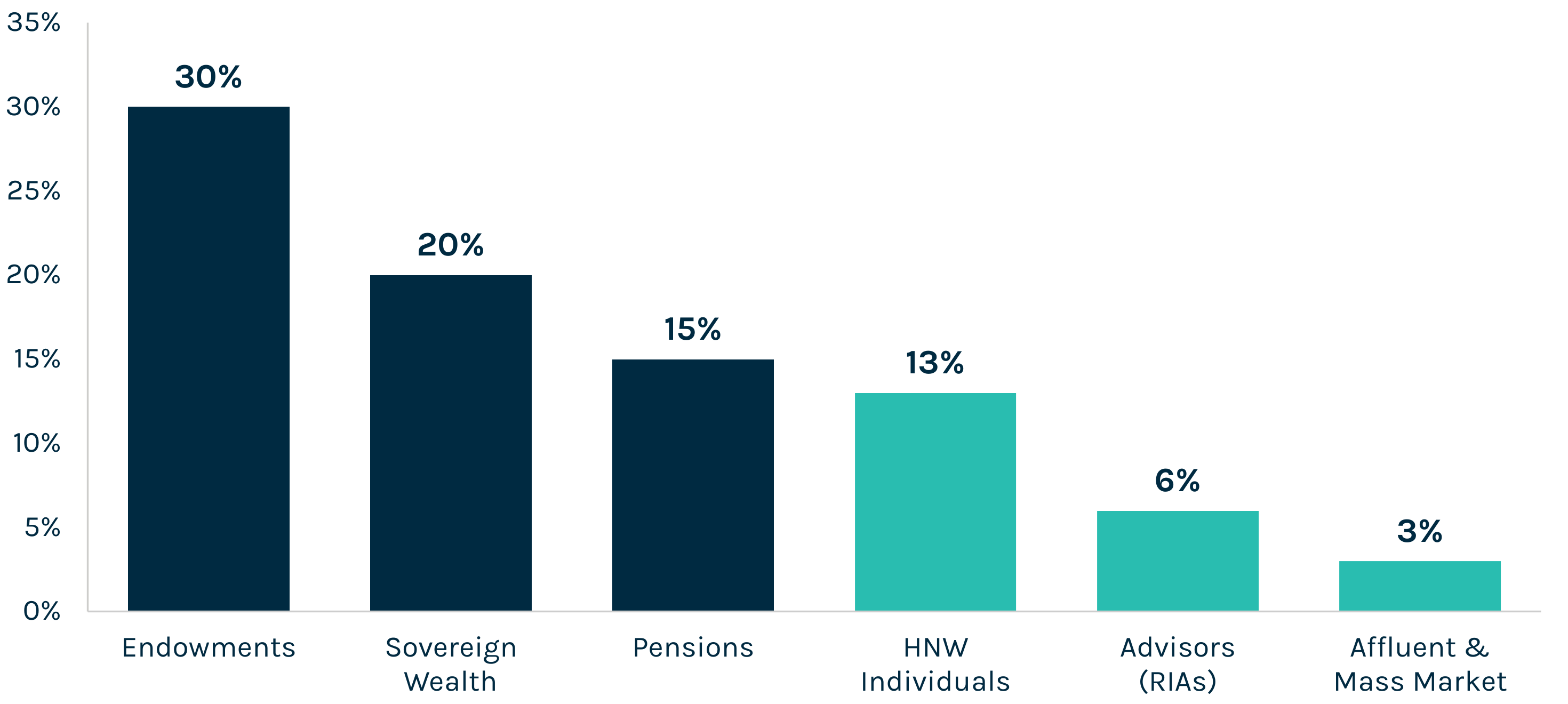
The average RIA financial advisor allocation to alternatives is 6%. We believe this has much more room to run if done properly.
Percentage Allocation to Alternatives by Investor Type (%)
20
GP Led deals are nearing 20% of PE exit activity and are on track to account for nearly $100B worth of transaction volume in 2025. Read more
Private markets have grown substantially over the past decade to an estimated $20T in size. Companies are staying private for longer, enabled by a large and dynamic private capital marketplace.
26
The commercial real estate debt maturity wall is estimated to hit $2.6T over the next four years. As asset owners look to refinance, we believe real estate private credit providers will benefit.
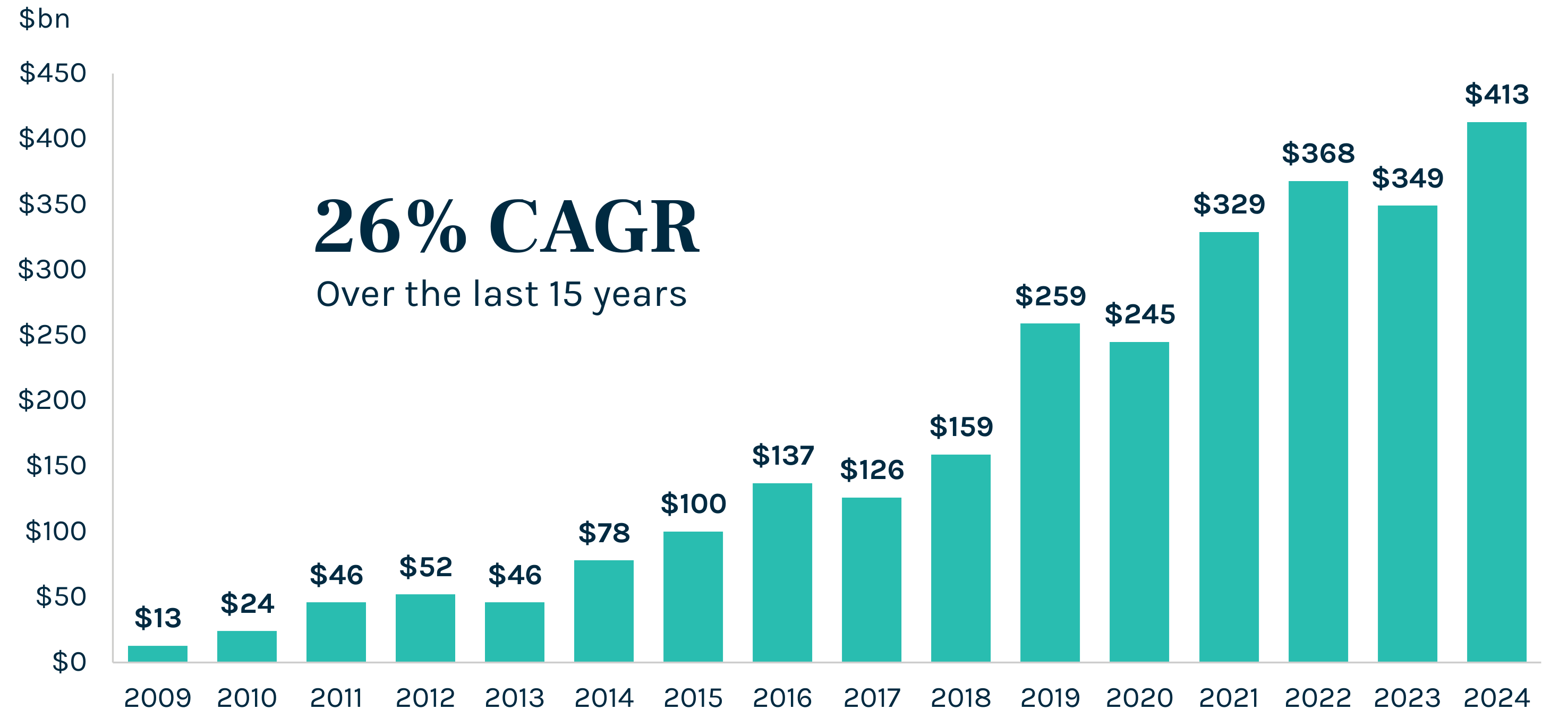
U.S. private infrastructure deal volume has grown at 26% CAGR over the past 15 years, marking one of the fastest growing segments of the private markets. Read more
U.S. Private Infrastructure Deal Volume Over the Last 15 Years
All things considered, 2025 was a great year for capital markets, public and private. Here’s to wishing you, your family and your business a happy and rewarding 2026!